Hair regrowth isn't binary — it's not 'works' or 'doesn't work.' The real question is: how much can you regrow, and what determines the outcome? The answer depends on three factors: which follicles are still viable, what's driving the loss, and how aggressively you intervene.
The Biology of Regrowth
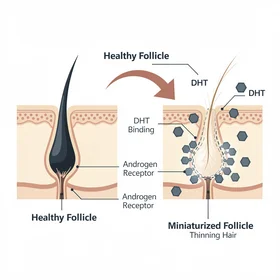
Male pattern baldness is progressive follicle miniaturization caused by DHT. Each growth cycle, affected follicles produce thinner, shorter hair until they eventually go dormant. But miniaturized is not dead. A follicle producing fine vellus hair is still alive — it's just suppressed. Remove or reduce the DHT signal, and many of these follicles can recover.
This is the window of opportunity for regrowth:
Regrowth Is Realistic When:
- Hair loss is recent (last 2–5 years of active thinning)
- Follicles are miniaturized but still producing fine hair
- You're Norwood II–IV (mild to moderate loss)
- You use a DHT-blocking treatment consistently for 6–12+ months
- You combine DHT blocking with a growth stimulator (minoxidil or topical activator)
Regrowth Is Unlikely When:
- Areas have been completely bald for years
- Follicles have gone fully dormant (no vellus hair visible)
- You're Norwood VI–VII (extensive loss)
- The cause isn't DHT-driven (autoimmune, traction, nutritional)
- Treatment is inconsistent or stopped after a few weeks
Treatment Efficacy: What the Data Shows
The Regrowth Timeline
Hair regrowth is slow. Individual hairs grow about half an inch per month, and the follicle recovery process takes even longer. Here's what to realistically expect:
- Month 1–2: No visible change. Treatment is working at the cellular level but results aren't visible yet.
- Month 2–3: Some men notice reduced shedding. This is the first sign the treatment is working — fewer hairs falling out means the loss process is slowing.
- Month 3–6: Early regrowth may become visible. Hair at the miniaturized edges may begin to thicken. Photographs taken in consistent lighting are more reliable than mirror assessments.
- Month 6–12: Peak regrowth window. This is when the most noticeable improvement typically occurs in men who respond to treatment.
- Year 1+: Maintenance phase. Gains are preserved with continued use; stopping treatment means gradual return to baseline.
The Two-Pronged Approach
The most effective regrowth strategy combines two complementary mechanisms:
- Block DHT — Remove the hormone signal that's causing follicle miniaturization. This can be pharmaceutical (finasteride) or natural (saw palmetto, beta-sitosterol, Procerin).
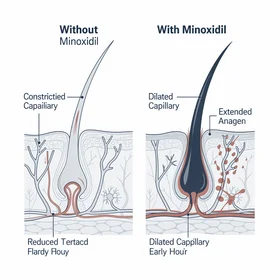
- Stimulate growth — Increase blood flow and extend the growth phase of remaining follicles. Minoxidil is the gold standard; topical activators like Procerin XT also target this pathway.
Using only one approach is less effective than using both. The combination data (94.1% improvement) vs. either alone (83% finasteride, 60% minoxidil) makes this clear.
What Won't Regrow Hair
Save your money on these:
- Biotin supplements — No effect on DHT-driven hair loss unless you have a deficiency (rare)
- Hair growth shampoos — Contact time on scalp is seconds; no meaningful absorption occurs
- Essential oils — No clinical evidence for androgenetic alopecia
- Laser combs/caps — Limited and inconsistent evidence; expensive for uncertain benefit
- Scalp massages — May feel good but don't address the DHT mechanism
Instead of unproven remedies, focus on evidence-based alternatives: natural DHT blockers for early-stage loss, prescription finasteride for moderate-to-advanced cases, or combination approaches that address multiple pathways. See our product comparison grid for a side-by-side breakdown of what each option offers.
Who Should Consider Hair Regrowth Treatment — and Who Shouldn't
Hair regrowth treatments are not one-size-fits-all. The right approach depends on your age, stage of loss, health profile, and tolerance for side effects. Here's an honest breakdown of who each strategy is best for — and who should look elsewhere.
Best for Men Under 30 With Early Thinning
If you're noticing early recession or diffuse thinning (Norwood I–II) and want to act before it progresses, a natural DHT blocker like Procerin is ideal for you. At this stage, follicles are mostly viable and respond well to mild-to-moderate DHT reduction. Starting early is the single strongest predictor of long-term success. You're the group most likely to see full stabilization and meaningful regrowth.
Best for Men 30–50 With Moderate Loss
If you're Norwood III–IV with visible thinning on the crown or temples, a combination approach is right for you: DHT blocking (natural or pharmaceutical) plus a growth stimulator like minoxidil. This stage benefits most from a multi-vector strategy because follicles are still recoverable but need stronger intervention than prevention alone. Topical prescription options like Procerin Rx are ideal for men in this group who want prescription strength without systemic finasteride.
Best for Men Who Want to Avoid Prescription Side Effects
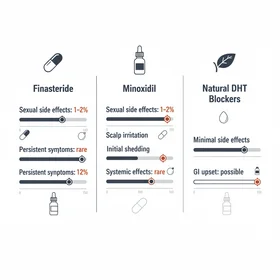
If sexual side effects from finasteride concern you — reported by 1–2% of users in clinical trials (Kaufman et al., JAAD, 1998) — natural DHT blockers are right for you. Saw palmetto and beta-sitosterol have not been associated with sexual side effects in any published trial. You'll trade some potency for a cleaner side effect profile.
Not Ideal For: Advanced Baldness (Norwood V+)
If you've been extensively bald for years, regrowth treatments alone are not the right fit. At this stage, most follicles have gone fully dormant. Medical therapy may slow further loss at the margins, but significant cosmetic regrowth is unlikely without hair transplant surgery. A dermatologist consultation is more appropriate than an OTC supplement for this group.
Not Ideal For: Non-Androgenetic Hair Loss
If your hair loss is caused by alopecia areata (autoimmune), traction alopecia (physical damage), telogen effluvium (stress/nutritional), or medication side effects, DHT-blocking treatments are not right for you. These conditions have different mechanisms and require different interventions. Consult a dermatologist for proper diagnosis before starting any regrowth product.
If your hair loss is concentrated at the temples and frontal hairline rather than the crown, the treatment approach differs. See the best treatments for a receding hairline for guidance specific to frontal recession.